
From the series The Right to Vote
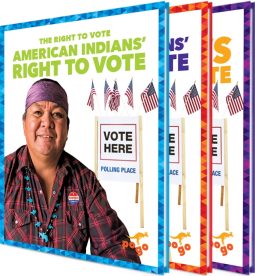
American Indians’ Right to Vote
Reading Level Grade 2Interest Level Grades 2 – 5Copyright 2025
Reviewed
From the series The Right to Vote
Reading Level Grade 2Interest Level Grades 2 – 5Copyright 2025
ReviewedIn this book, early fluent readers will learn about democracy, the voting process in the United States, and the struggles and successes Americans Indians have gone through to gain and practice their right to vote. Learn why it took until 1924 for all American Indians to become U.S. citizens and what setbacks they face when trying to vote.
A Take a Look! map infographic compares American Indians’ historical land to the reservations some live on today. Sidebars present interesting, supplementary information, and a timeline highlights setbacks and successes Americans Indians have faced in relation to voting.
Children can learn more about voting using our safe search engine that provides relevant, age-appropriate websites. American Indians’ Right to Vote also features reading tips for teachers and parents, a table of contents, a glossary, and an index.
American Indians’ Right to Vote is part of Jump!’s The Right to Vote series.
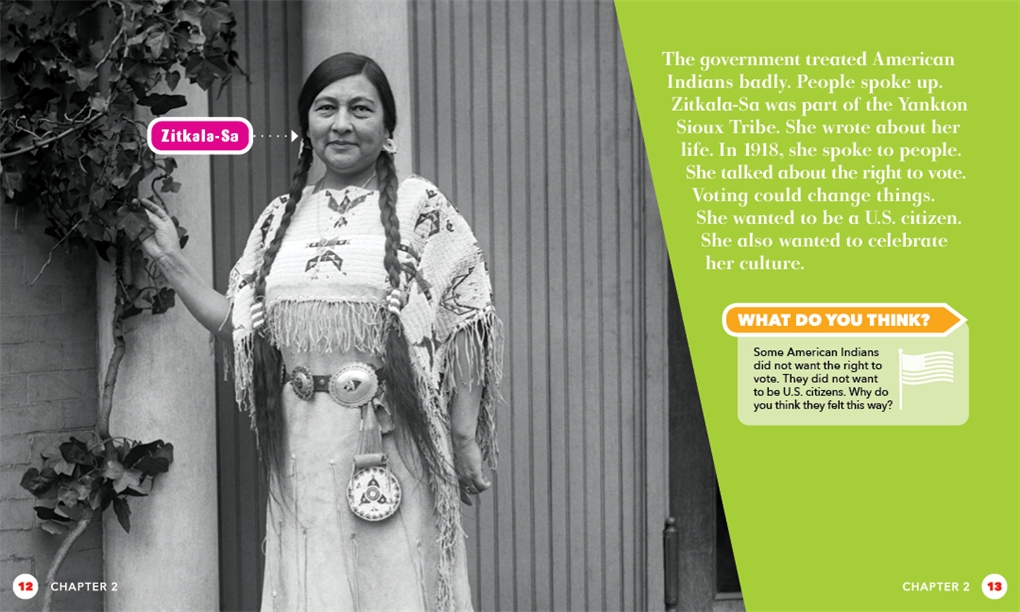
With the upcoming presidential election, kids may have questions about the election process in the U.S. This book in The Right to Vote series (4 titles) aptly highlights the inequality in voting rights for Native Americans, highlighting how their vote was historically oppressed and how that continues today. After first defining voting and its importance, the text pivots to Native American history, their diaspora, and the criminal acts of the U.S. government against Indigenous peoples. Maps illustrate how American Indian land loss worsened over time, and pictures of notable Native Americans, such as Zitkala-Sa, serve as powerful images. Bright, colorful blocks pair with black-and-white photographs alongside text bubbles with glossary words to draw the eye to pertinent facts. Questions for readers throughout the book will help kids think through the issue deeply. The inclusion of positive changes adds a hopeful tone to the conclusion. A parent-and- teacher guide prefaces the main text, offering helpful information and discussion prompts. A time line and glossary round out this candid resource.
Booklist
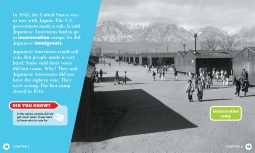
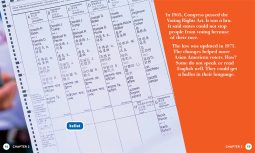
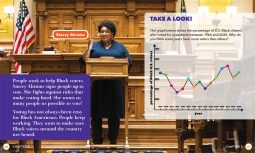
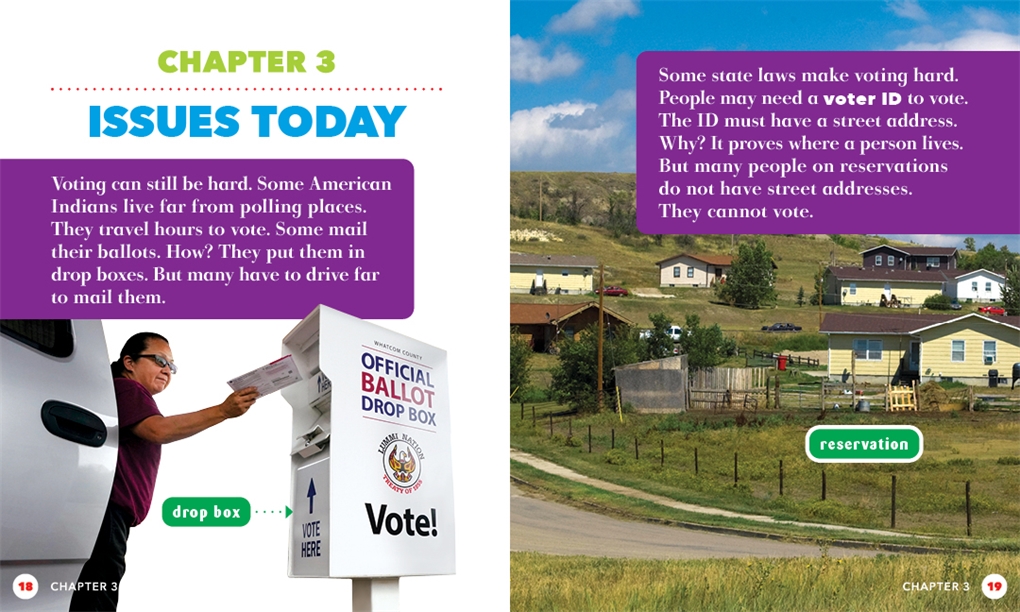
This series covers the struggle to achieve voting rights for various groups. Illustrations include archival photos as well as current scenes at polling places. Text is generally a few sentences per page or paragraphs facing a full-page image. Critical thinking questions and additional details appear in small text boxes scattered throughout the book. Each title ends with a timeline of important events on the path to voting rights for the group. An additional graphic of some sort is included in each book, such as a map showing when the first 36 states voted for the 19th Amendment or a graph showing Black voter participation in presidential elections since 1964. A glossary and access to the Fact Surfer website offer additional support for readers. VERDICT Recommended purchase for updating collections and to complement social studies units on civic engagement.
School Library Journal