From the series Apex Predators of the Amazon Rain Forest
Jaguar
Reading Level Grades 2-3Interest Level Grades 2 – 5Copyright 2017
Reviewed
From the series Apex Predators of the Amazon Rain Forest
Reading Level Grades 2-3Interest Level Grades 2 – 5Copyright 2017
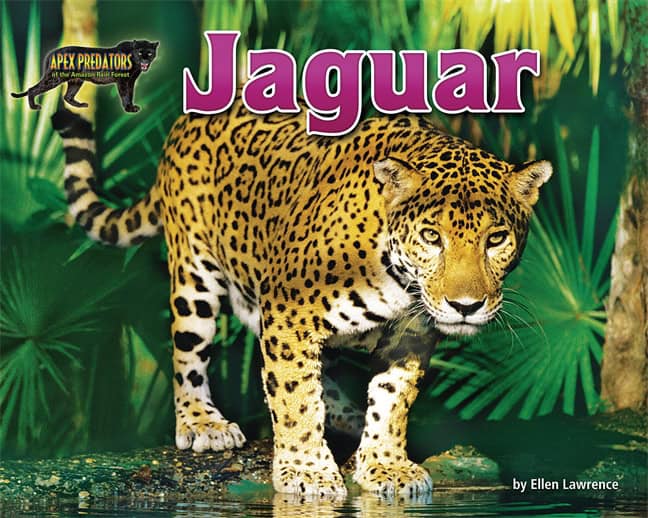
ReviewedIt’s early morning in the Amazon rain forest. A caiman glides through the waters of a muddy river. Suddenly, with a huge splash, a jaguar leaps from its hiding place on the riverbank. In an instant, the jaguar sinks its sharp teeth into the caiman’s thick, scaly skin. The caiman struggles and tries to fight back, but it’s no match for the powerful jungle cat. Filled with information perfectly suited to the abilities and interests of its primary-grade audience, this colorful, fact-filled book gives readers a chance not only to learn all about jaguars and their Amazon rain forest home, but also to develop their powers of observation and critical thinking. Built-in investigations, such as figuring out how the jaguar’s fur pattern helps it to hunt, and measuring the predator’s sharp canine teeth, give readers a chance to gain insights beyond the facts and figures.
Apex Predators of the Amazon Rain Forest: Jaguar stands out among books about predators because of its engaging formatting and its questioning strategies that propel the reader forward through the texts. In addition, it has clear, crisp photographs that are closely paired to the text to give young readers a good introduction to this predator. The vocabulary is limited enough for the target audience, but has some adaptation specific vocabulary to enrich the reader's knowledge. The text features are well formatted for young readers. I would use this text to allow students to gather information about animal adaptation and sensory processing. I think that it provides good information to support students' understanding of core ideas in animal behavior. It would also support using text features for research and synthesis of information. Because this text is part of a series of similar texts, it would be a great classroom addition for shared research.
NSTA Recommends