From the series Down & Dirty: The Secrets of Soil
Dirt or Soil
Reading Level Grade 2Interest Level Grades K – 3Copyright 2016
Reviewed
From the series Down & Dirty: The Secrets of Soil
Reading Level Grade 2Interest Level Grades K – 3Copyright 2016
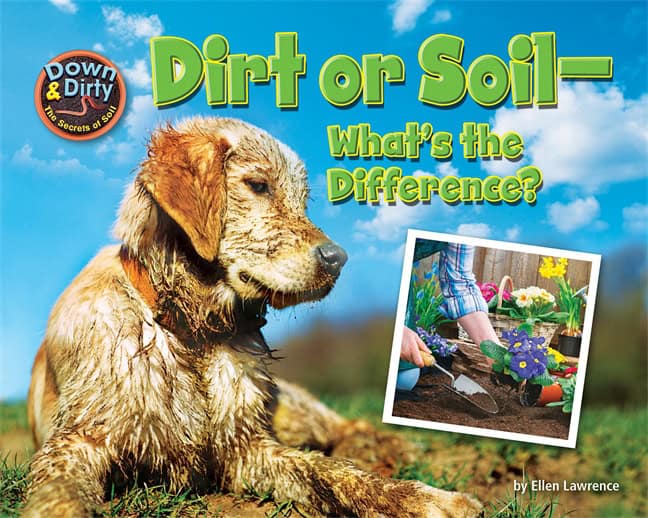
ReviewedSoil can be brown, black, crumbly, dry, wet—but so can dirt. So what’s the difference? People often use the words “soil” and “dirt” to mean the same thing, but in science they are not the same at all. Soil is a material that plants can grow in, while dirt is the muddy footprints you leave on the floor on a wet day. Inside this book, readers will get down and dirty as they investigate what makes soil special and why dirt is something we need to wipe, sweep, or vacuum away. What ingredients are in soil? Why is soil said to be living, whereas dirt is dead? And when it’s under your fingernails, is it dirt or soil? Filled with information perfectly suited to the abilities and interests of an early elementary audience, this colorful, fact-filled volume gives readers a chance not only to learn, but also to develop their powers of observation and critical thinking. With its stunning photographs and surprising, high-interest facts about a material that most of us take for granted, the book makes learning about soil a lively, engaging experience.
Part of the series Down & Dirty: The Secrets of Soil, this book helps young students to develop a clearer understanding of the differences between soil and dirt. The book provides an understandable definition for what soil is, how it is formed, and why it's important to living things. In the classroom the book creates high interest with clear pictures that illustrate the content. Beginning with a Table of Contents to guide the reader to the information they may be looking for, each section uses text and clearly labeled illustrations to develop key science concepts. Important words are bolded and then defined in theScience Words section using both pictures and text. There is aScience Lab section that suggests investigations that students can complete that focus on the content of the book. An index at the end of the book allows the reader to find specific places in the book where key ideas are presented. As a part of your library, this book can be used as a tool for primary age students to begin doing research for reports or projects. In addition theScience Labs section contains some great ideas for both individual and class investigations. The investigations not only focus on doing, but also on the importance in science of recording and analyzing data.
NSTA Recommends